Wedding Bands
How to Design Matching Wedding Bands as a Couple
Matching doesn't have to mean identical. Here's how couples actually approach designing bands together — and what to decide before your consultation.
'Matching' rarely means identical
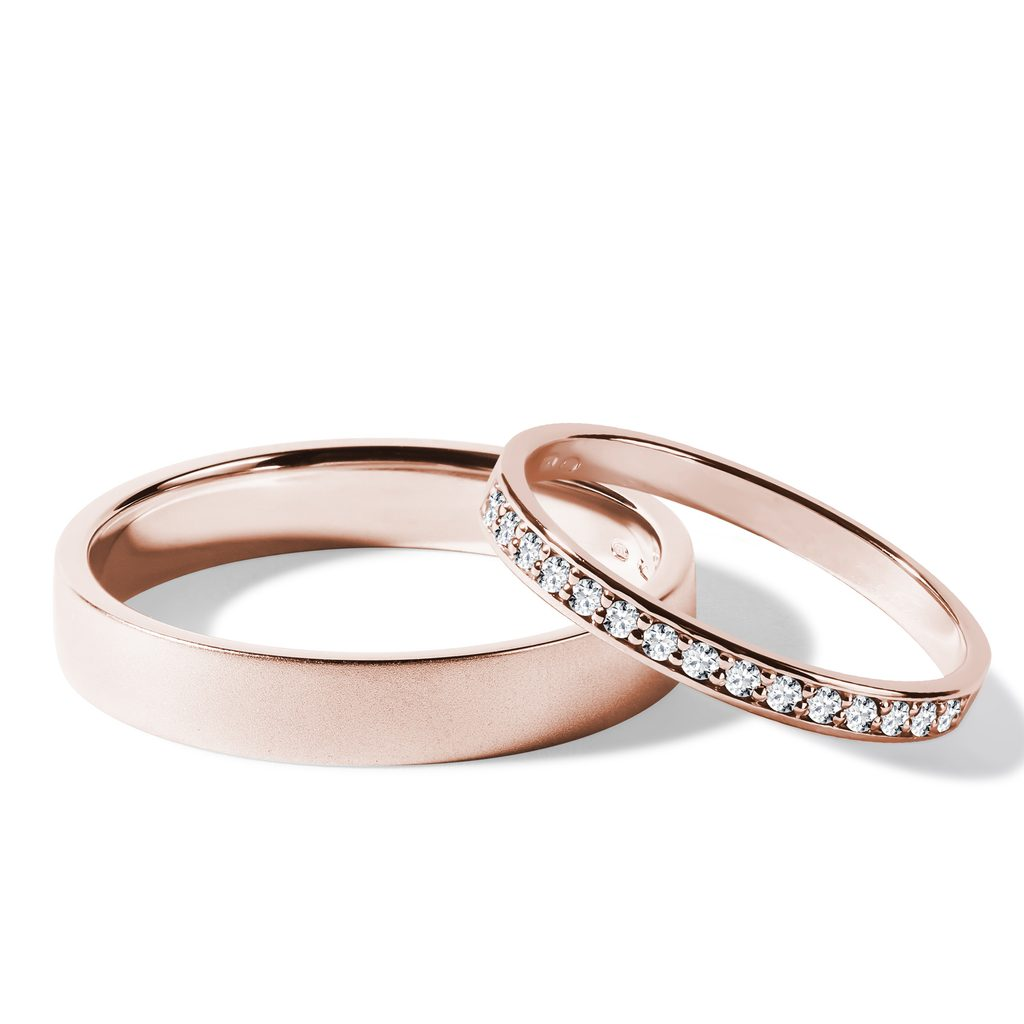
Most couples who want matching bands actually mean complementary — same metal, same finish, or a shared design detail, rather than two literally identical rings. It reads as intentional without looking like a uniform.
Start with what you'll actually wear
Men's and women's bands typically differ in width and profile even within a matching set — a wider, flat-edge band paired with a slimmer, comfort-fit one is common and comfortable for both. Comfort should win over perfect symmetry.
Shared metal is the easiest starting point
Committing to the same metal — both platinum, or both yellow gold — is the simplest way to feel connected without either of you compromising on style. From there, one band can be simple and the other detailed.
A shared engraving or detail
Some couples skip visual matching entirely and instead share a hidden engraving — a date, initials, or a phrase inside each band — which only the two of you know is there.
Designing them together vs. separately
We can design both bands in a single consultation if you're planning together, or design each individually as a surprise and simply align on metal and general style beforehand so they still feel cohesive.
Budget for two
When planning a matching set, tell us your combined budget upfront rather than per-ring — it gives us room to balance the two designs sensibly, for example a slightly simpler men's band freeing up budget for more detail on the other.