Ring Styles
Non-Traditional Engagement Rings: A Real Guide
Diamonds aren't a requirement. Here's what's actually possible when you step outside the default — and what to know before you do.
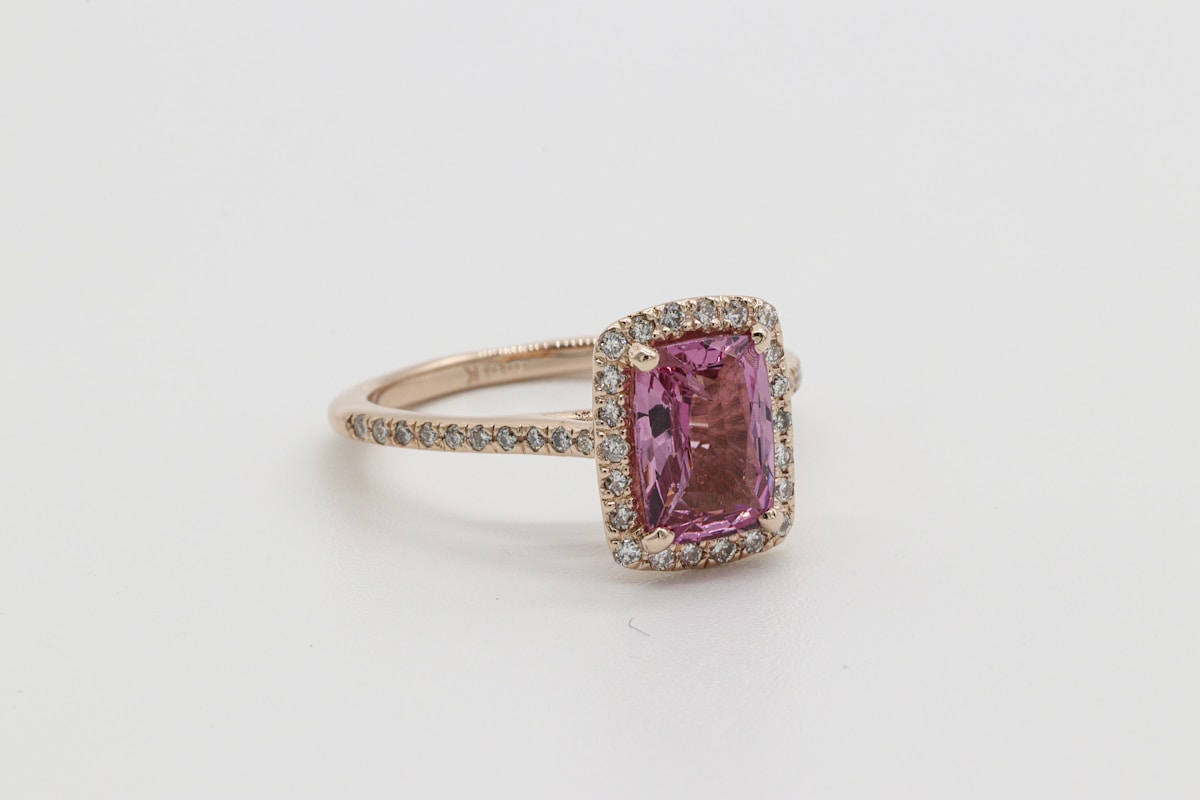
Colored center stones are the most common alternative
Sapphire, emerald, ruby, and morganite are the most requested non-diamond centers — sapphire in particular has centuries of precedent (it's what Kate Middleton, and originally Princess Diana, wore) so it reads as intentional rather than unconventional, while still standing out from the default.
Durability matters more with colored stones
The Mohs hardness scale matters here: sapphire and ruby score a 9 (nearly as durable as a diamond's 10), making them genuinely practical for daily wear. Emerald sits lower at 7.5-8 and is more prone to chipping — still workable for an engagement ring, but worth a protective setting and a bit more care.
Black diamonds and salt-and-pepper diamonds
For clients who want to stay within diamond but skip the classic white, black diamonds offer a bold, modern look, while salt-and-pepper diamonds — visibly included, with natural gray and white flecks — have become popular precisely because each stone's pattern is unrepeatable, appealing to anyone who wants something no one else could have.
Alternative metals worth knowing about
Beyond the standard gold/platinum choices, black rhodium plating over white gold creates a striking dark finish, and mixed-metal designs (a rose gold band with white gold prongs, for instance) add visual complexity without needing an unusual stone.
What to consider before committing
Ask about the stone's durability for your lifestyle, whether the color is naturally occurring or treated (both are legitimate, but the price and care differ), and how a non-traditional choice might affect future resizing or resale — informed excitement beats an uninformed surprise six months in.
It's still entirely your call
There's no rule requiring a diamond, a certain color, or a specific metal — the only real requirement is that the piece means something to the two of you. A custom design process exists specifically to make an unconventional choice feel just as considered and well-made as a classic one.