
Wedding Bands
Designing a Bridal Set That Actually Works Together
An engagement ring and wedding band that were designed as a pair sit differently on the hand than two rings bought separately. Here's how to plan for that from the start.
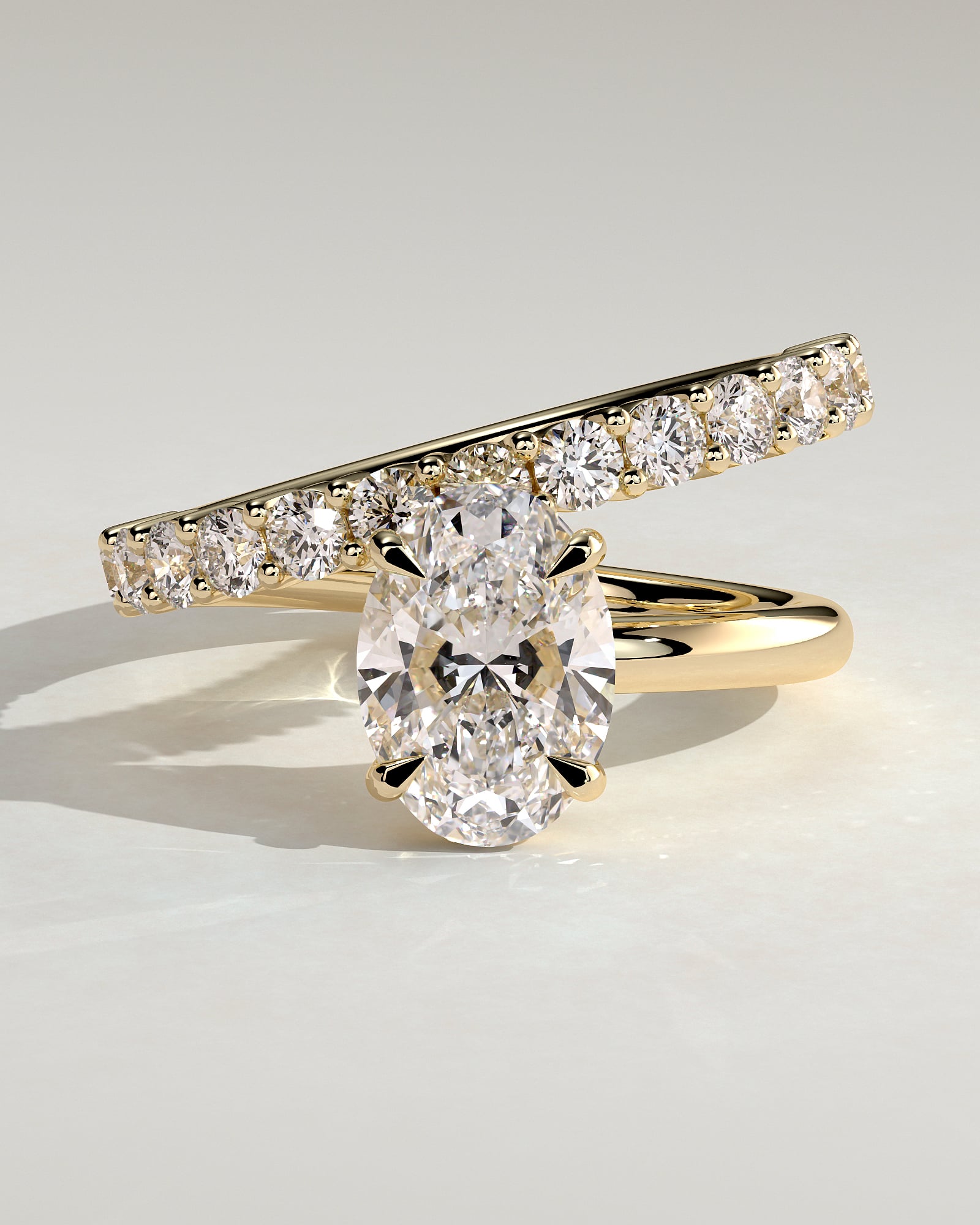
Why 'matching' isn't really the goal
The two pieces don't need to look identical — they need to sit flush against each other with no visible gap and no awkward metal-on-metal collision. That's a fit problem, not a style problem, and it's the main reason bridal sets designed together outperform two rings bought at different times from different places.
The profile of the engagement ring drives everything
A cathedral setting, a low-set solitaire, and a setting with a curved gallery each require a differently shaped wedding band to sit flush beside them. Designing both pieces together means the band's inner curve can be built to trace the exact silhouette of your specific engagement ring, rather than approximating a generic curve after the fact.
Deciding the wear order
Some bridal sets are meant to be worn together permanently, soldered or fused after the wedding for a seamless single unit. Others are designed to sit close but separate, so each ring can still be worn alone. Deciding this upfront changes how the band's inner edge is shaped.
Matching metal, mixing metal, or matching detail instead
Same-metal pairing is the safest, most classic choice. Some clients intentionally mix metals — a white gold engagement ring with a bolder wedding band, for instance — and instead match the pieces through a shared design language, like matching prong style or matching stone size, rather than matching metal.
Where the eternity band question comes in
Pavé, channel-set, or shared-prong wedding bands read as more 'finished' next to a solitaire but require more careful width and stone-size matching to avoid competing with the center stone. A simpler band often photographs better next to a busier engagement ring, and vice versa.
How the design process actually works for a set
Both pieces are modeled in the same CAD session so we can rotate and check the fit digitally before either is fabricated — catching gaps or clashes on screen instead of after the metal is cast. It typically adds only a small amount of time to the standard 48-hour CAD turnaround.