Fine Jewelry
Custom Earrings: A Complete Buying Guide
Weight, backing style, and size proportions matter more for earrings than almost any other jewelry category — here's what actually determines comfort and daily wearability.
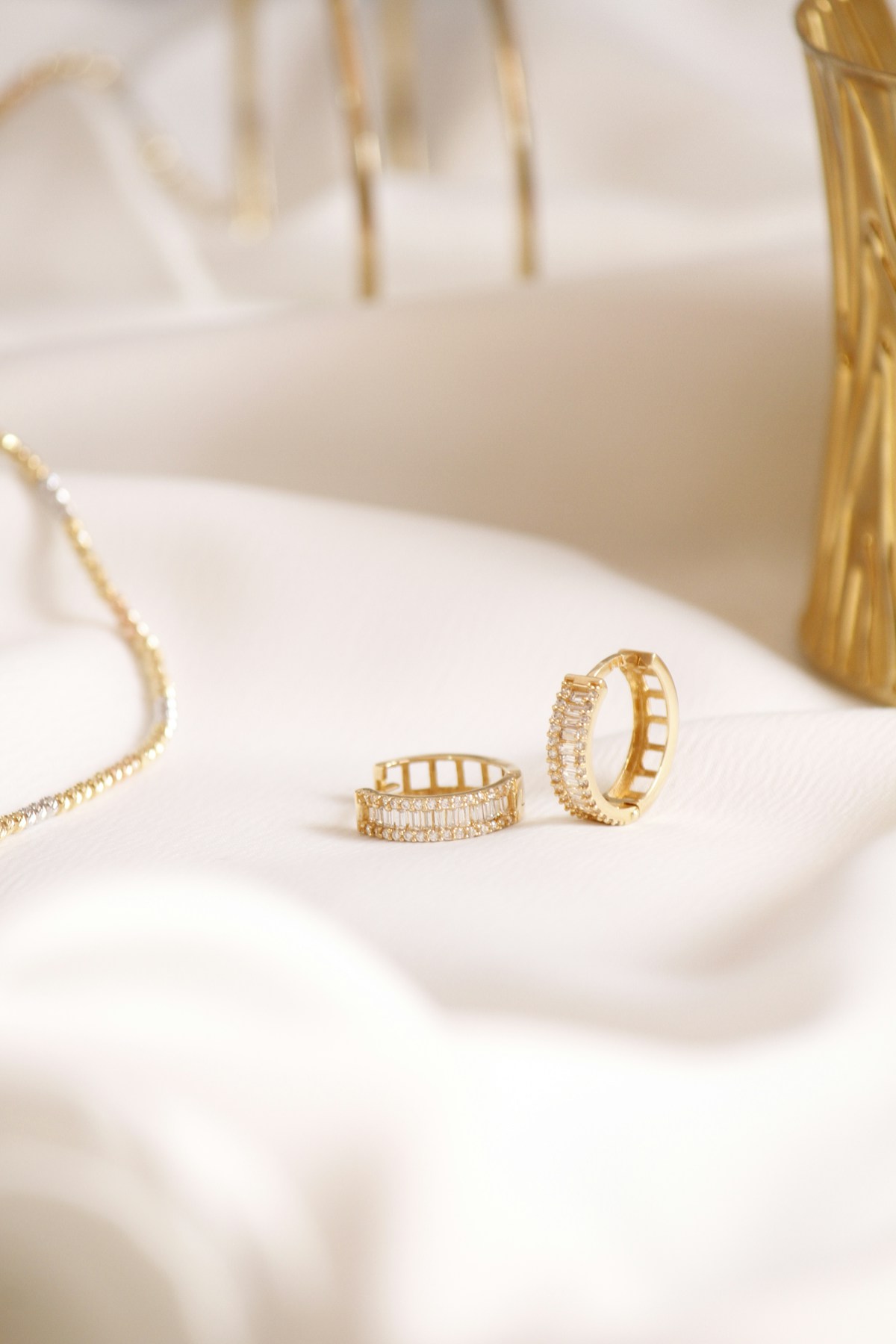
Hoops, studs, and huggies each solve a different need
Studs sit close to the ear and work with virtually anything, making them the most versatile daily option. Hoops add movement and presence, ranging from small huggies (which hug the earlobe closely) to statement-sized pieces. Huggies specifically have become popular because they offer some of a hoop's visual interest with a stud's low-profile comfort.
Weight is the detail that determines actual daily wear
Earrings are worn longer per day than almost any other jewelry category, and unlike a ring or necklace, weight is felt directly by a small area of skin. A pair that feels fine for a two-hour event can feel genuinely uncomfortable by hour eight — worth being explicit about daily-wear intentions when discussing metal weight and stone size.
Backing style affects both security and comfort
Push backs are the simplest and most common for studs. Screw backs offer more security, useful for anyone worried about losing an earring, but take slightly longer to put on. For hoops, a hinged snap closure is generally more secure for daily wear than a simple wire hook.
Matching a new pair to existing jewelry
If you already own a ring or pendant in a specific metal tone and stone quality, matching new earrings to it precisely is a common and straightforward request — it's one of the easiest ways to build a cohesive personal collection over time rather than accumulating mismatched pieces.
Asymmetric and mismatched pairs are a real, growing option
A single ear crawler on one side, or two different — but coordinated — designs per ear, has moved from niche to genuinely popular. If a perfectly matched pair doesn't excite you, this is a legitimate direction worth discussing rather than a compromise.
Sizing for your specific ear
Hoop and huggie proportions that look right in a photo don't always suit every earlobe size and shape — bringing a photo reference to your consultation is useful, but final proportions are worth confirming against your actual ear before production.